

The Psychology of Adult Friendship: Why It’s Hard And How to Fix It
Ever wondered why it’s so hard to make friends as an adult? Here’s the psychology behind modern adult friendships and practical, low-pressure ways to build real connections in Australia.
Making friends as a child is effortless. You sit next to someone in class, share a game, and suddenly you’re best friends.
As adults? Not so much.
If you’ve ever wondered “Why is it hard to make friends as an adult?”, you’re not alone. Many Australians find themselves feeling disconnected - juggling work, routines, responsibilities, and social fatigue. The good news: it’s not your fault. There are real psychological reasons adult friendships feel harder, and once you understand them, rebuilding a social life becomes far more doable.
Let’s break it down and fix it.
Why Adult Friendship Feels So Difficult (Backed by Psychology)
1. You no longer have built-in social environments
In childhood and early adulthood, friendships form through school, uni, sports, clubs, shared classes - environments designed for bonding.
But as we grow old, we naturally shift places and environments and lose these easy-to-build friendship ways.
Suddenly, you need to create your own circle from scratch and that’s unfamiliar to most people and that’s exactly when loneliness also creeps in as highlighted by the Australian Institute of Health and Welfare’s findings on social isolation and loneliness.
2. Your schedule is full - and so is everyone else’s
Careers. Commutes. Relationships. Kids. Errands.
When time becomes limited, social energy becomes scarce.
This is why so many people say:
“I want more friends - I just don’t know how to make one anymore.”
3. You’re more selective as you grow older
Research shows adults value depth over quantity.
You’re not looking for any friend - you’re looking for someone who fits your lifestyle, values, humour, and energy.
This makes friendships more meaningful but also harder to initiate.
4. Fear of rejection becomes stronger with age
Kids rarely worry about being judged.
Adults? We’ve had experiences - awkwardness, ghosting, mismatched vibes.
So people pull back, staying in familiar routines even when they crave more social connection.
5. Digital fatigue replaced real human interaction
We scroll, swipe, consume content, send DMs - but none of this replaces real relationships.
Digital connections make us feel “linked” but not bonded.
This creates what researchers call the friendship gap:
You have contacts, but not actual meaningful friends, a pattern also reflected in ABC’s discussion on how increasing digital behaviours contribute to social disconnection among young adults.
The Good News - You Can Fix It (Here’s How)
Modern friendships require intention, but once you understand what works, building a social life becomes far easier.
1. Start with repeated, low-pressure interactions
Humans bond through frequency, not intensity.
It’s why the person you see at the gym three times a week feels familiar, even if you barely talk.
Low-pressure, repeated interactions lead to natural friendships.
Try this:
- Visit the same café weekly
- Join a walking group
- Attend the same yoga class
- Go to a recurring creative workshop
Small consistency creates stronger bonds.
2. Do activities that naturally attract your type of people
Shared interests remove awkwardness instantly.
Instead of forced small talk, you connect over something common.
Choose activities you genuinely enjoy - walking, art, reading, photography, gaming, sports, food, board games, coffee catchups.
If you prefer a more structured guide on meeting like-minded people nearby, you may also find this helpful: Meet People With Similar Interests in Australia
The more you enjoy the activity, the easier it becomes to enjoy yourself with people.
3. Use interest-based platforms designed for adult friendships
Dating apps aren’t built for platonic friendships.
Event apps are too big and overwhelming.
What actually works best?
One-on-one or small-group, interest-based meetups.
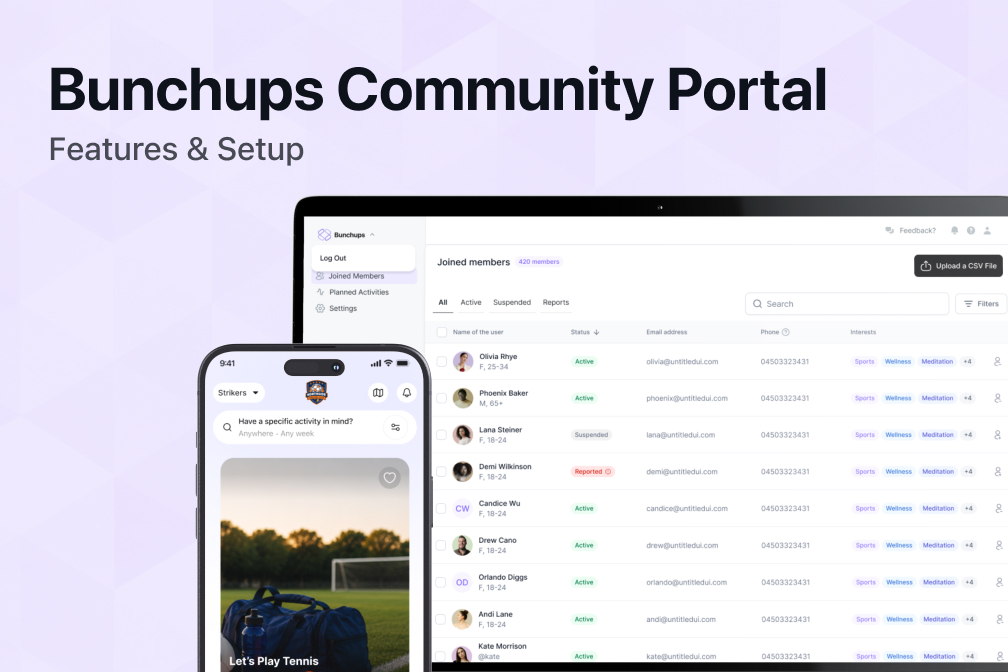
That’s where Bunchups comes in:
- Meet people nearby in person
- Based on shared interests
- One-on-one or small group catchups
- Safe and verified profiles
- Catch up now or plan for later
For more practical ideas on which platforms to use, you can also read: Top 5 Apps to Make Friends in Australia
4. Start tiny conversations - even micro-interactions
You don’t need to become “social.”
You just need to start small.
- “Hey, is this class usually busy?”
- “I love your water bottle - where’s it from?”
- “Have you been here before?”
These micro-interactions are the seeds of real relationships.
5. Follow the 2:1 Friendship Rule
For every two “micro” interactions, try doing one small activity together:
- A coffee after gym
- A short walk after class
- Trying a new café
- Attending another event together
This is how casual acquaintances become real friends.
6. Accept that adult friendships take time - but the time is worth it
Research shows adult friendships often form slowly, but they last longer and go deeper.
Consistency > intensity.
Small efforts > big gestures.
Shared interests > forced networking.
You’re not behind - you’re human.
Final Thoughts - You’re Not Alone in This
If adult friendship feels hard, it’s because life has changed, not because you’ve done something wrong.
With the right psychology, the right environment, and the right small steps, your social world can open up again and guides like How to Make Friends as an Adult in Australia can help you take that first step.